

At the Annual Congress of the European Academy of Allergy and Clinical Immunology (EAACI), Dr. Feng Zhou, CEO of Atheron Therapeutics, attended this world‑leading academic event for allergy and immunology. He presented the R&D progress of the company’s core candidate, MRGPRX2 inhibitor ATH‑004, to global experts. The candidate has advanced to the Investigational New Drug (IND) application stage and is poised to enter clinical development.
Mas-related G-protein coupled receptor member X2 (MRGPRX2) is a class A GPCR expressed on mast cells. Mast cells are granulated tissue-resident cells known for host cell response, allergic response, and vascular homeostasis. Immunoglobulin E receptor (FcεRI)-mediated mast cell activation is a well-studied and recognized mechanism of allergy and hypersensitivity reactions. MRGPRX2 was discovered as the receptor responsible for non-IgE-mediated mast cells activation. MRGPRX2 is mainly expressed on mast cells and exhibits varying affinity for many molecules such as antimicrobial host defense peptides, neuropeptides, and even US Food and Drug Administration-approved drugs. Therefore, the development of MRGPRX2 inhibitors will provide new therapeutic options for mast cell-associated diseases.
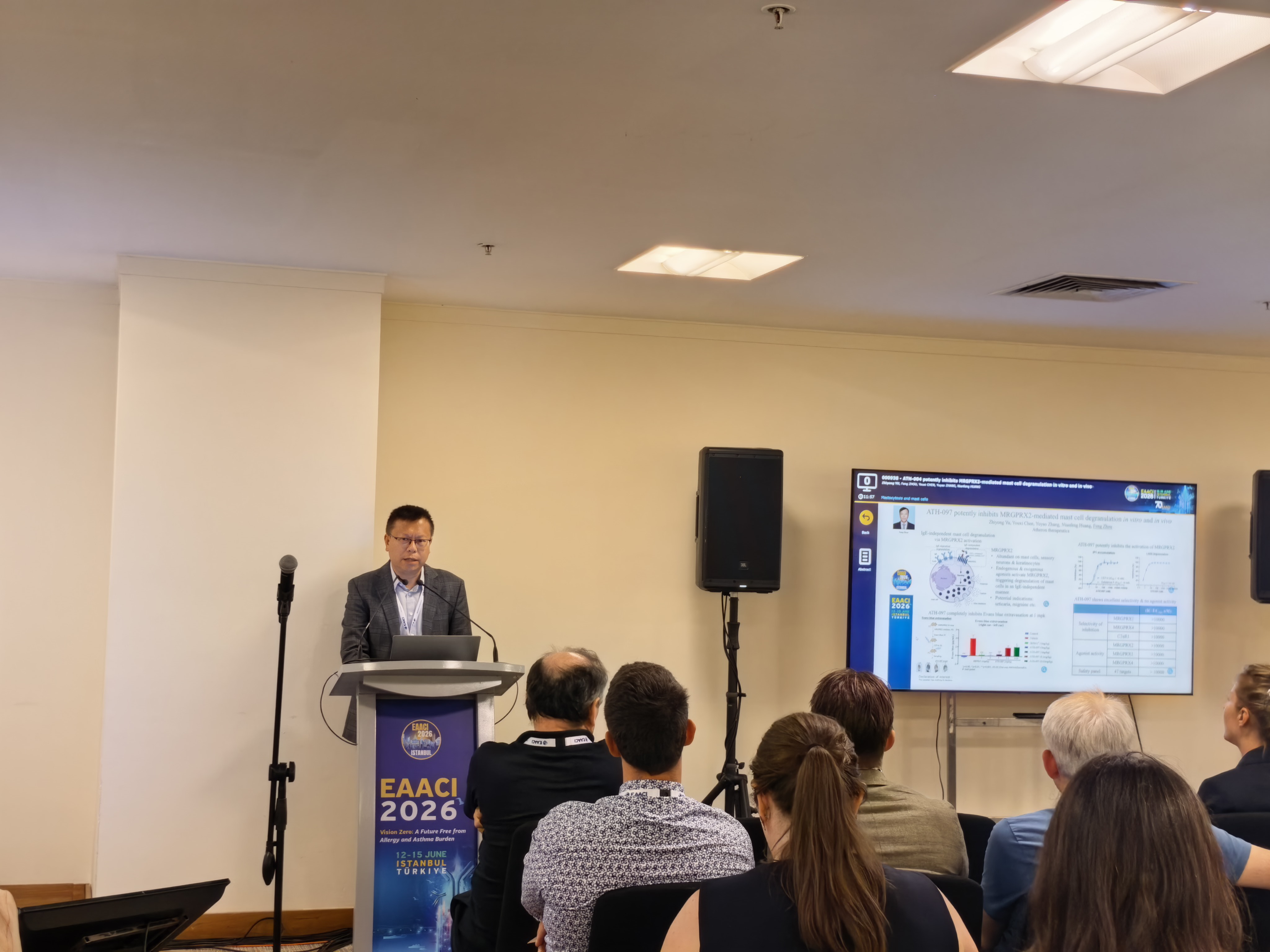
Figure 1: Dr. Feng Zhou presenting ATH-004 at EAACI 2026.
ATH‑004 is a home‑grown MRGPRX2‑targeted inhibitor from Atheron Therapeutics. Pre‑clinical studies have demonstrated favorable target selectivity and druggability for the molecule, which is expected to deliver a novel therapeutic option for refractory allergic diseases driven by mast cell activation.
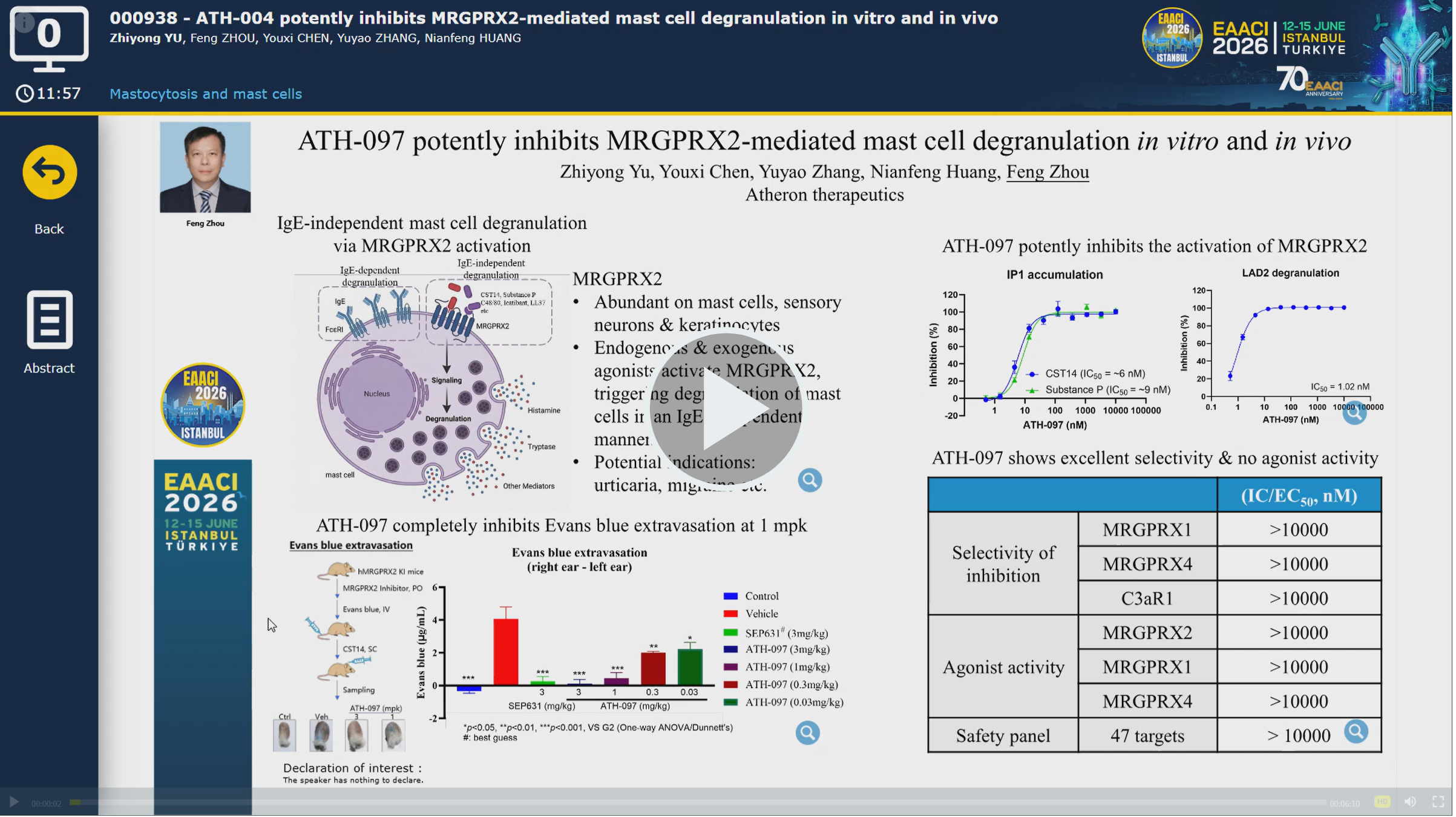
Figure 2: ATH-004 project poster at EAACI.
During the congress, Dr. Feng Zhou commented: “As a pre‑eminent global academic platform in allergy and immunology, EAACI enables high‑impact scientific dialogue among innovative biopharma players worldwide. ATH‑004 represents a key asset within our pipeline. We are steadily moving forward with the IND submission. We look forward to validating the therapeutic value of this asset in clinical studies, addressing unmet medical needs and bringing China‑originated innovation to patients across the globe.”
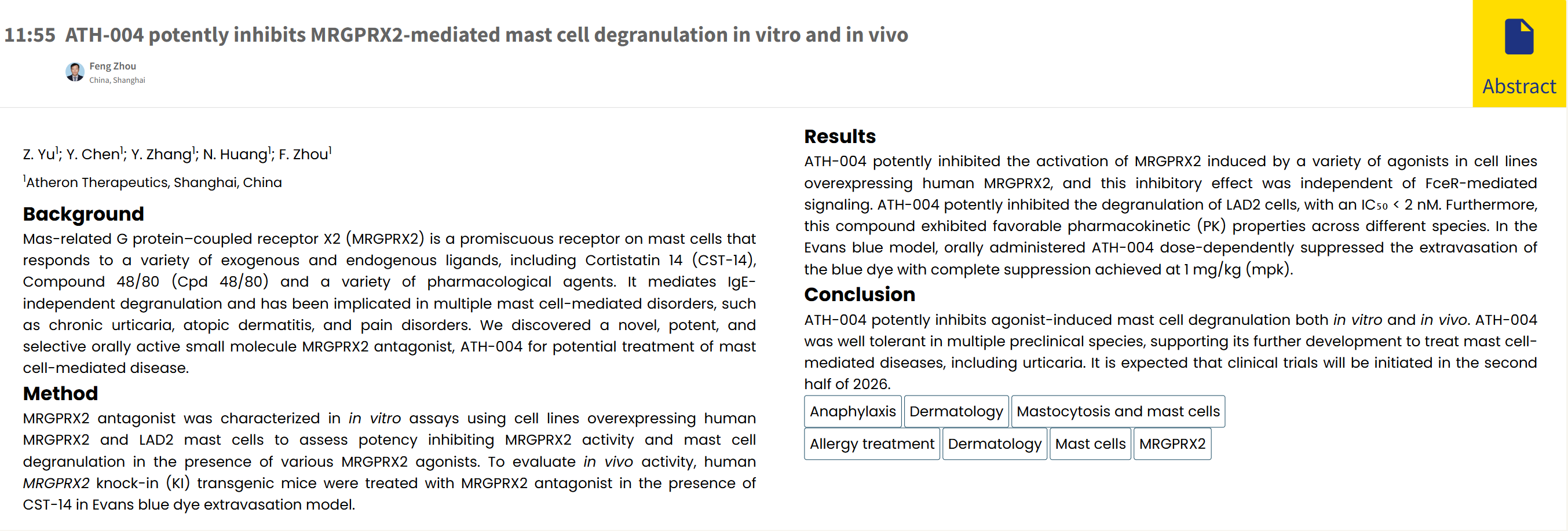
Figure 3: Project abstract of ATH-004.
The presentation at EAACI underscores international academic recognition of this potential molecule from Atheron Therapeutics. The company will vigorously drive forward the IND filing and clinical translation of ATH‑004, further expand its innovative pipeline for autoimmune and inflammatory disorders, and accelerate the development of original‑innovation therapeutics.